
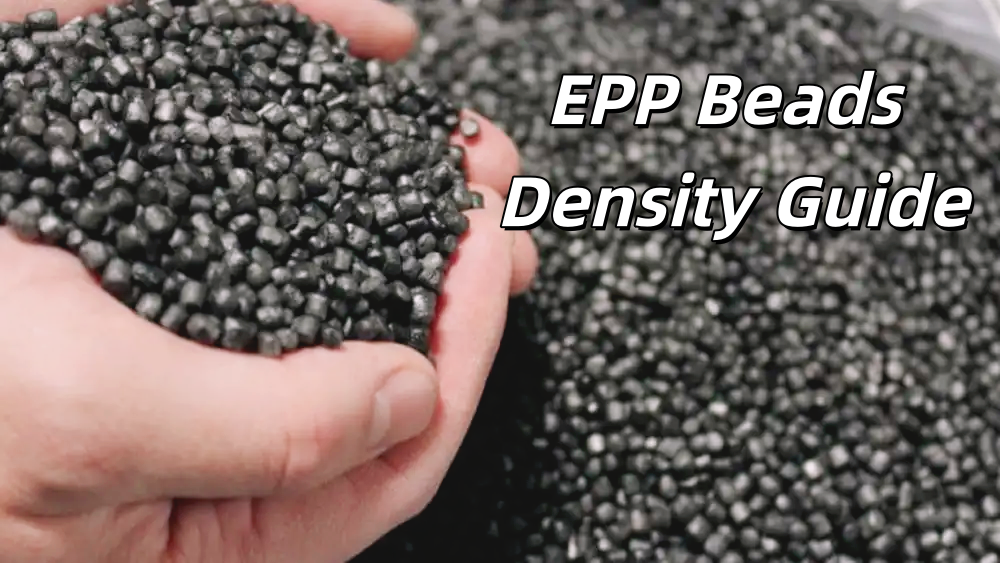
EPP Beads Density Guide
EPP beads density refers to the weight of expanded polypropylene material per cubic meter. Typically, the density ranges from 20 to 200 kg/m³ depending on the application. Lower densities provide lightweight cushioning and thermal insulation, while higher densities deliver greater structural strength and impact resistance. Therefore, selecting the right density is essential for both performance and cost efficiency.
In industrial manufacturing, density directly affects compression strength, recovery rate and durability. As density increases, load-bearing capacity improves. However, higher density also raises material weight and production cost. For this reason, engineers must balance mechanical requirements with economic considerations.
Table of Contents
ToggleWhat Is EPP Density?
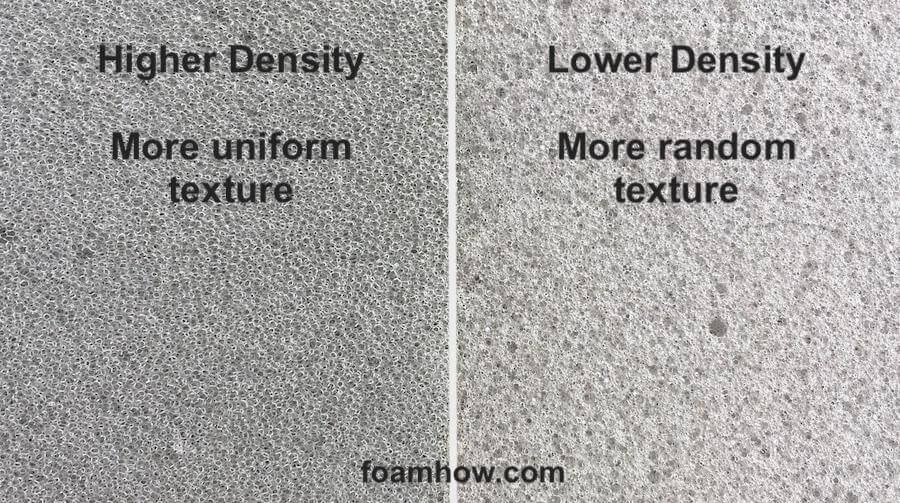
Quick answer: EPP density describes how much material exists in a specific volume of expanded polypropylene foam. It directly affects strength, weight, cushioning performance, and impact resistance.
Typical Applications
- 📦 Packaging – lower density for lightweight protection
- 🚗 Automotive – higher density for energy absorption
- 🏭 Industrial parts – higher density for structural strength
Standard EPP Density Range
Typical EPP density ranges from 20 kg/m³ to 120 kg/m³. Different density levels provide different mechanical properties, weight characteristics, and impact performance. As density increases, compressive strength and structural rigidity improve. Meanwhile, lower density foam offers lighter weight and better cushioning.
Because of this balance, manufacturers select density levels based on the final product requirements. For example, lightweight packaging products usually use lower-density materials. Automotive and industrial parts, on the other hand, often require higher density EPP to improve durability and energy absorption.
The table below shows common EPP density ranges and their typical applications.
| Density (kg/m³) | Material Characteristics | Typical Applications |
|---|---|---|
| 20 – 30 | Ultra-lightweight, flexible structure | Protective packaging, cushioning inserts |
| 30 – 45 | Lightweight with improved resilience | Consumer packaging, insulation parts |
| 45 – 60 | Balanced strength and shock absorption | Automotive interior components |
| 60 – 80 | High structural strength | Automotive bumpers, protective systems |
| 80 – 120 | Maximum rigidity and durability | Industrial structural components |
⚙️ Choosing the correct density improves product performance, reduces material waste, and ensures reliable impact protection.
How to Choose the Right EPP Density
Choosing the correct EPP beads density is essential for achieving the right balance between weight, strength, cushioning performance, and cost efficiency. Different applications require different density levels because density directly affects mechanical strength, durability, and impact resistance.
In general, low-density EPP provides excellent lightweight cushioning for packaging, while high-density EPP offers stronger structural support for automotive and industrial components. Therefore, selecting the appropriate density helps manufacturers optimize both product performance and material efficiency.
The table below summarizes typical density recommendations for common EPP foam applications.
| Application | Recommended Density | Reason |
|---|---|---|
| 📦 Protective Packaging | 20–40 kg/m³ | Lightweight cushioning with excellent shock absorption during transportation |
| 💻 Electronics Protection | 30–50 kg/m³ | Balanced impact protection and durability for sensitive electronic devices |
| 🚗 Automotive Components | 45–80 kg/m³ | High strength and long-term performance for energy absorption parts |
| 🏭 Industrial Structural Parts | 60–120 kg/m³ | Maximum rigidity and structural stability for load-bearing components |
Overall, selecting the proper EPP density improves product performance, extends service life, and reduces material waste. For industrial manufacturers, understanding density selection is an important step in designing reliable EPP foam solutions.
EPP Density Selection Tips
Selecting the correct EPP foam density depends on the product design, required strength, and application environment. While low density improves weight reduction, higher density increases rigidity and structural stability.
Therefore, manufacturers usually balance impact protection, durability, and material cost when choosing the appropriate density grade.
- ✔ Low Density (20–40 kg/m³) – ideal for protective packaging and lightweight cushioning.
- ✔ Medium Density (40–60 kg/m³) – suitable for consumer products and electronics protection.
- ✔ High Density (60–80 kg/m³) – commonly used in automotive energy-absorbing parts.
- ✔ Ultra-High Density (80–120 kg/m³) – designed for structural and industrial applications.
As a result, selecting the correct density improves product performance, extends service life, and reduces material waste during production.
Quick EPP Density Selection Guide
| Density Range | Typical Use | Key Advantage |
|---|---|---|
| 20–40 kg/m³ | Protective packaging | Ultra lightweight and shock absorbing |
| 30–50 kg/m³ | Electronics protection | Balanced cushioning and durability |
| 45–80 kg/m³ | Automotive components | Energy absorption and long lifespan |
| 60–120 kg/m³ | Industrial structural parts | Maximum rigidity and strength |
FAQ About EPP Density
What is the typical density range of EPP foam?
Most EPP foam products use densities between 20 kg/m³ and 120 kg/m³. Lower densities are used for lightweight packaging, while higher densities provide structural strength for automotive and industrial parts.
Does higher density EPP mean stronger foam?
Yes. Higher density EPP generally offers greater compressive strength and durability. However, it also increases material weight and production cost.
Which EPP density is best for packaging?
Protective packaging typically uses densities between 20–40 kg/m³. This range provides lightweight cushioning and effective shock absorption during transportation.
Why is EPP used in automotive components?
Automotive manufacturers prefer EPP because it combines light weight, impact resistance, and recyclability. These properties help improve vehicle safety and fuel efficiency.